Ten Tips for Meat Vendors Attending a Farmers’ Market By Danielle Devota
CHESANING, Michigan:
We raise grassfed beef, pasture raised chicken and forest raised pork in Central Michigan. The previous year we had tried retailing our meat for the first time instead of only selling it in shares - sides of beef and pork and whole chickens. It was successful and we saw our customer base triple by simply offering smaller quantities of meat. Not everyone has the space for 100 pounds of meat or 10 chickens.
Offering retail meat provided more opportunities for face-to-face conversations with our customers. When people buy meat shares from us, there’s a good chance we don’t ever see them in person. We deliver the animal to the butcher and they pick the processed meat up directly from there.
Along with face-to-face time with our customers, another motivator for doing a farmers’ market was cash flow. Our existing shares model wasn’t spreading the income out at a pace that worked with our expenses. Offering retail allowed us to see more regular inputs of cash on hand instead of big drops every other month.
We’re still a small operation so while our herd sizes are growing, they have to grow at the rate our acres of pasture grow. This dictates how often we can send cattle to the butcher. Also, the butcher situation in Michigan is still pretty saturated and we have to book out over a year in advance.
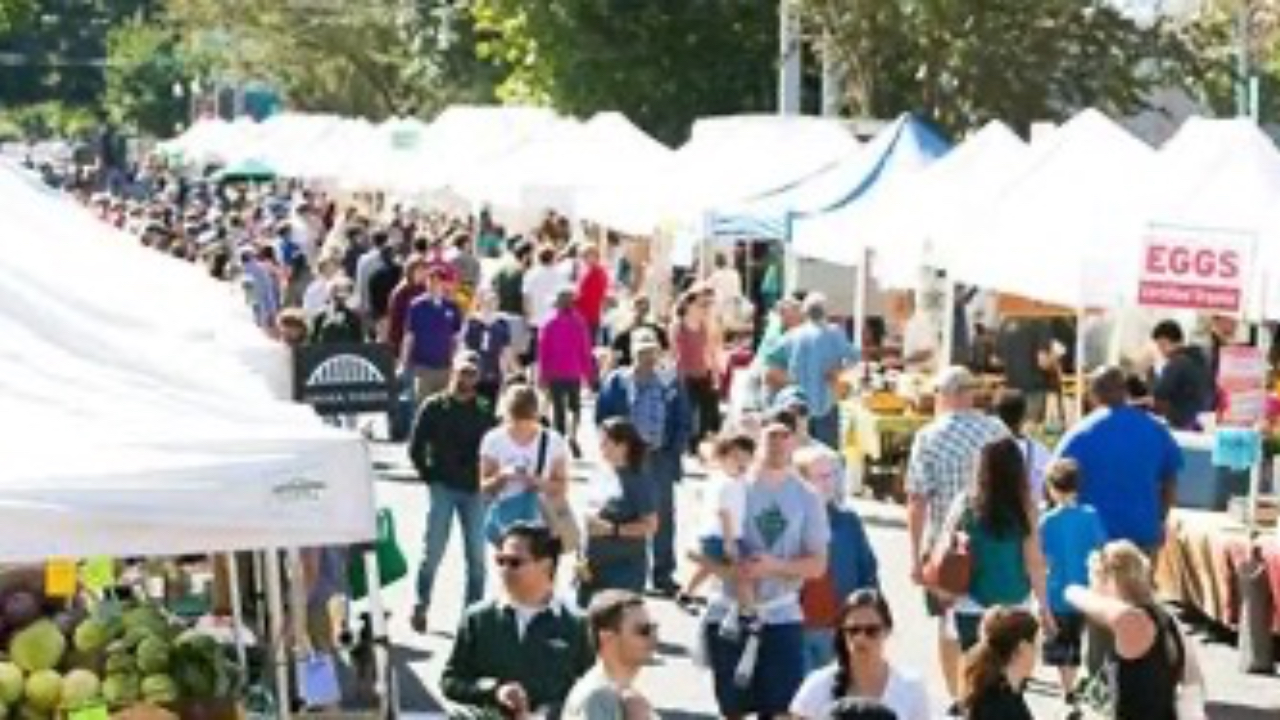
We decided to do a test run at the medium sized market the summer before we were considering joining as a regular vendor. The market hosted a special event outside of their regular Saturday market where they accepted new, one-time vendors. We applied and were chosen to attend. While this special market featured more artisan-type vendors, our sales did well. People were excited to see us and encouraged us to join the Saturday market.
Now that our first market season is over and we’re preparing for our second, we find ourselves evaluating what worked, what didn’t and what we might try differently. Here are 10 tips we learned doing our first market:
- Pick a time frame that works for you. While not every farmers’ market offers different options and pricing for starting their market, some do. Don’t be afraid to ask the market manager to figure out the option that works best for you. Due to the weather in Michigan, we feed mostly hay don’t carry chickens after the beginning of October. While we carry over some products from the fall until the spring, most of our product availability starts in mid June. The market we joined starts May 1, but we didn’t start the market until the beginning of July to ensure we had enough product to make it worth our and our cus- tomers’ time.
- Help educate custom ers on seasonal availability of meat. Many consumers are used to going to the grocery store and getting exactly what they want when they want it. Buying meat from a farm can be very different. Since our farm is still small, we only have so many of each cut. We’re still trying to figure out how much of each item to carry and how best to space out our butcher dates, but it’s an ever moving target. I’m not sure we’ll ever get it perfect. Also, we choose to butcher animals when they’re consuming their food at its peak.While our hay is good quality, we prefer to butcher our animals during the times when they are on fresh grass. We believe this choice shows up in the taste of the meat. It’s important to help customers understand both these points. And what better place than at a farmers’ market where customers are already faced with the seasonality of other things like fruits and vegetables.
- Don’t feel obligated to carry every cut. For our first year, we stuck with basic cuts - burger, steaks, and roasts. While we would get requests for different cuts from time-to-time, we mostly sold these staples. We’ve decided to let customer feedback fuel our decisions on adding different cuts. We tried a few different cuts early on and sat on them for quite some time as our customer base wasn’t devel- oped enough for moving those products.
- Consider skipping the rain days. A light rain might be ok. People might still show up if it’s a sporadic rain, but a cold, all day rain probably won’t be worth your time to sit there all day. We did this once and learned pretty quickly we wouldn’t be doing it again. While some markets claim to have strict attendance policies, not all enforce them. Weigh this against your costs for traveling and sitting at the market all day without many sales to show for it.
- Be honest about your costs. Fees and equipment (tent, table, coolers, etc.) add up and cut into your profit. We borrowed items where we could from family and friends and slowly bought our own items. We also started the market by both attending every week. As we reached our busier times on the farm, only one of us attended. But we realized we had to be honest about the cost for the farm of having us both sitting there every Saturday, all day, when there was other work to be done. While it’s nice to have a buddy at the market, our booth isn’t so overwhelmed with sales yet to justify the cost of having more than one person working at it.
- Advocate for your space! Most of the time our booth was located in the same spot every week, but there were a couple of times we got moved to a different spot. Some of our regulars missed us. If the market manager wants to move you, speak up and have a conversation about the importance of being in the same spot week after week.
- Offer pre-order market pick-ups. This can be especially helpful if you run out of a product during a market day. Not to mention, people at your booth create more people. We saw time after time how people standing at our table brought more people stopping to look, chat and buy. Pre-orders help guarantee you’ll have people at your booth during the market.
- Capture email sign-up. Farmers’ markets are a great way to build your email contact list for marketing. We doubled our contacts in our first year. We’ve seen direct positive impacts to our sales through our email marketing.
- Get creative with your display. Selling frozen meat is a tough display at a market. We usually can’t display our items the same way produce or specialty goods like candles or popcorn can. We have to keep it frozen, which usually means it’s tucked into coolers. People can be puzzled by what we have to offer, despite signage. Consider getting creative with your table dis- play. Set out pictures of products or animals. I also found a standing chalkboard outside our booth was very effective in letting people know what we had. I featured specific products each week and found our sales of those items went up each time I did.
- Stand by your product. You will have people stop at your booth and remark on your pricing compared to the grocery store or other meat vendors who raise their meat more conventionally and offer it at a lower price. Recognize that not everyone is your customer and stand by your product. I recommend sitting down and putting together responses for yourself so you feel prepared when this happens. The question is when it will happen, not if.
These are only a few of the valuable lessons we learned in our first year at a farmers’ market. I’m sure we’ll continue to learn and grow as we attend more markets in the future, but hopefully these can help someone else thinking of joining a market.
Danielle Devota is a freelance writer and co-owner of Section 32 Farms out of Chesaning, Michigan.
Stay connected with news and updates!
Join our mailing list to receive the latest news and updates from our team.
Don't worry, your information will not be shared.
We hate SPAM. We will never sell your information, for any reason.